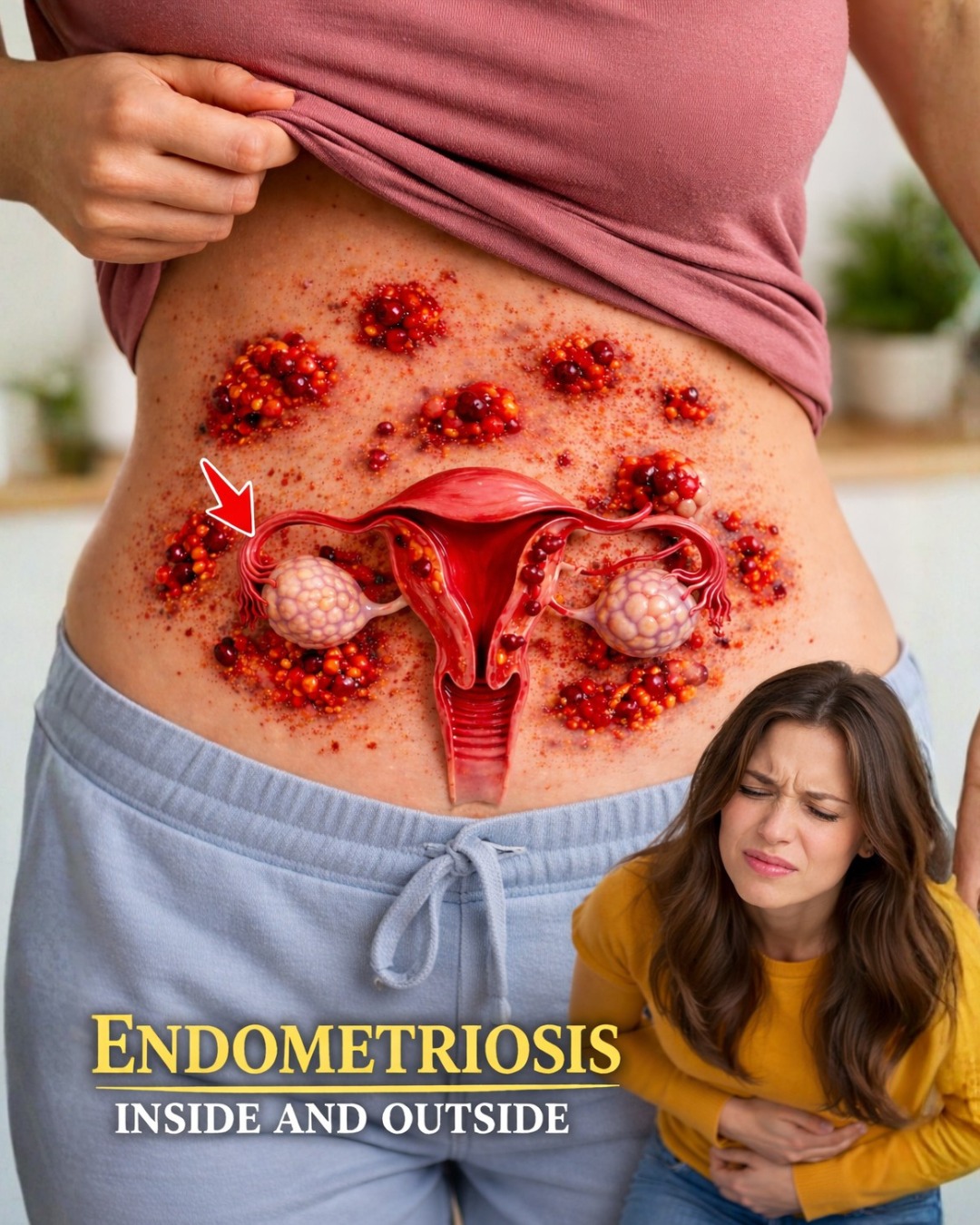
Millions of women endure severe pelvic pain that goes well beyond typical menstrual cramps, affecting their ability to work, enjoy relationships, and simply get through the day. These symptoms are often brushed off as “just bad periods,” leading to years of frustration, isolation, and unnecessary suffering while life passes by. The good news is that gaining a clear understanding of what’s happening in your body can make a real difference in how you approach it. But there’s one surprising daily habit that many women find helps them feel more in control, and we’ll reveal it toward the end.
What Is Endometriosis, Really?
Endometriosis happens when tissue similar to the lining inside your uterus starts growing in other places. Doctors call the normal lining inside the uterus the endometrium. But with endometriosis, this tissue can appear on the ovaries, fallopian tubes, the outer surface of the uterus, or even on organs like the bladder or bowel.
The image many women see online shows this condition “inside and outside” the body for a reason. Inside, it behaves like regular uterine tissue, thickening and shedding each month. Outside, it has nowhere to go, so it causes inflammation, scarring, and those intense cramps you feel.
But that’s not all. This misplaced tissue can create adhesions that stick organs together, making movement painful. Studies show it affects roughly 10 percent of women in their reproductive years worldwide, yet it often flies under the radar for years.
Recognizing the Signs: Common Symptoms to Watch For
If your periods feel like they’re knocking you off your feet, you’re not alone. Here are the most frequently reported symptoms:
- Intense pelvic pain that can last days before, during, and after your period
- Pain during or after sex that feels deep and lingering
- Heavy or irregular bleeding that soaks through pads or tampons quickly
- Painful bowel movements or urination, especially around your cycle
- Chronic fatigue that no amount of rest seems to fix
- Difficulty getting pregnant, even after trying for months
These symptoms vary wildly from woman to woman. Some feel mild discomfort while others describe it as debilitating. The key? Tracking your symptoms in a simple journal or app can help you see patterns your doctor needs to know.
Why Does Endometriosis Happen? Looking at Possible Causes
Researchers still don’t know the exact cause, but several theories exist. One popular idea is retrograde menstruation, where menstrual blood flows backward through the fallopian tubes instead of leaving the body. Genetic factors also play a role—if your mother or sister has it, your chances go up.
Hormones, immune system responses, and even environmental factors may contribute. The important thing to remember is that it’s not your fault. No lifestyle choice “causes” endometriosis, but understanding these pieces helps you feel less alone when talking with your doctor.
How Endometriosis Affects Daily Life Inside and Out
Living with endometriosis isn’t just about the physical pain. It can touch every part of your world. Work becomes tricky when pain hits unexpectedly. Relationships strain when intimacy feels uncomfortable. Even simple things like planning a vacation around your cycle can feel exhausting.
The “outside” effects show up as bloating, digestive issues, or lower back pain that radiates. Inside, the inflammation can lead to scarring that affects fertility for some women. Yet many women build full, rich lives by learning what works for their bodies.
Here’s where it gets interesting: small, consistent habits can shift how you experience the condition day to day.
Practical Lifestyle Habits Many Women Find Supportive
You don’t need fancy equipment or expensive supplements to start feeling a bit better. Focus on gentle, sustainable changes you can actually stick with.
First, consider your plate. Many women notice less inflammation when they lean into certain foods and step away from others. Here’s a quick guide:
Foods many women embrace:
- Fatty fish like salmon or mackerel for their natural anti-inflammatory omega-3s
- Colorful berries, leafy greens, and turmeric for antioxidants
- Ginger and cinnamon teas that feel soothing on crampy days
- Nuts, seeds, and olive oil to keep meals satisfying and balanced
Foods many women choose to limit:
- Processed snacks and sugary drinks that can spike inflammation
- Red meat and fried foods that some studies link to more discomfort
- Excessive caffeine or alcohol right before your period
But food is only part of the picture. Movement matters too. Gentle yoga, walking, or swimming can ease tension without making pain worse. Heat therapy—think a warm heating pad or hot bath—remains one of the simplest tools in the toolbox.
Stress management is the often-overlooked habit we promised earlier. When cortisol spikes, pain signals can feel amplified. Simple breathing exercises, short meditations, or even journaling your wins each day can create a surprising sense of calm.
When to Talk With Your Doctor
Don’t wait until the pain becomes unbearable. If your periods regularly stop you from living your life, or if you’ve been trying to conceive without success, schedule an appointment. Bring your symptom tracker and be specific about how it affects you. Early conversations can lead to earlier support options.
Wrapping It Up: Knowledge Is Power
Endometriosis is complex, but understanding what’s happening inside and outside your body takes away some of the fear. By paying attention to symptoms, making small daily choices, and working with knowledgeable healthcare providers, many women regain a sense of control over their days.
You deserve to feel heard and supported. Start with one small change this week—maybe that ginger tea or a 10-minute walk—and see how your body responds.
FAQ: Your Most Common Questions Answered
1. Can endometriosis go away on its own?
It usually doesn’t disappear without help, though symptoms can sometimes ease after menopause when hormone levels drop. Most women work with their doctor for ongoing support.
2. Is endometriosis the same as painful periods?
No. While painful periods are common, endometriosis pain often feels deeper, lasts longer, and can occur outside of your cycle. Tracking helps tell the difference.
3. Will every woman with endometriosis have trouble getting pregnant?
Not at all. Many women conceive naturally, while others explore options with fertility specialists. Talking openly with your doctor gives you the clearest picture for your situation.
Disclaimer: This article is for informational purposes only and is not a substitute for professional medical advice. Always consult your healthcare provider for personalized guidance regarding your symptoms or condition.