Many men experience symptoms that seem like a common cold or flu and think little of it. Yet when fatigue lingers longer than usual or unusual rashes appear, it can leave you feeling concerned and uncertain about your health. These changes in your body deserve attention because early awareness can lead to better health decisions. Understanding potential signs is a proactive step toward taking care of yourself.
But there’s more to the story than just recognizing symptoms. Stick around as we break down seven key signs, explore why they matter, and share practical steps you can take to protect your well-being.
Understanding Early Signs of HIV in Men
HIV infection can present differently in each person. Some men may notice symptoms shortly after exposure, while others experience none at all in the early stages. According to health organizations like the CDC, flu-like symptoms often appear within 2 to 4 weeks after potential exposure during what is known as acute HIV infection.
These signs are not unique to men, but recognizing them is important for everyone. Keep in mind that many symptoms can stem from other common conditions, which is why professional medical evaluation is essential.
1. Persistent Fatigue and Fever
One of the most reported early experiences is a deep sense of tiredness that doesn’t improve with rest. You might feel exhausted even after a full night’s sleep or find simple tasks draining your energy.
This fatigue often comes alongside a mild to moderate fever and chills. If you’ve been feeling run down for days or weeks without a clear reason, it’s worth paying attention to your body.
But here’s what many people don’t realize: this isn’t the same as everyday tiredness from work stress. It can be your body’s response to fighting an infection.
2. Skin Rash
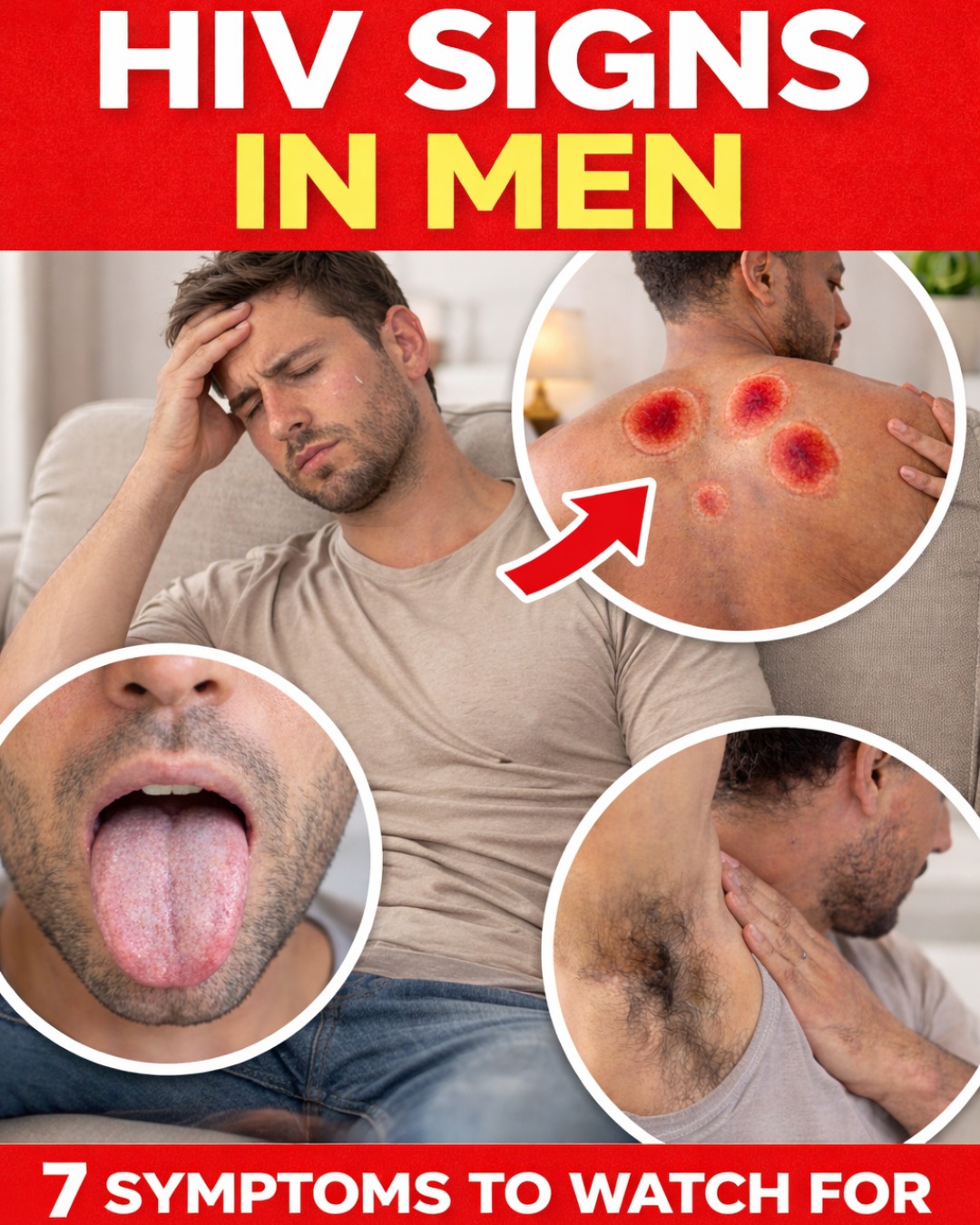
A noticeable rash is another common sign. It often appears as red, flat spots on the trunk, back, or other areas of the body. The image of circular red patches on the back highlights how these rashes can look quite distinct.
Unlike allergic reactions, HIV-related rashes are usually not very itchy. They can come and go or persist for days.
Research indicates that this rash occurs as the immune system reacts to the virus. If you notice an unexplained rash, especially with other symptoms, consider discussing it with a healthcare provider.
3. Swollen Lymph Nodes
Your lymph nodes play a key role in your immune system. When they become enlarged and tender – particularly in the neck, armpits, or groin – it can be a signal that something is going on.
The photo showing a hand near the underarm area illustrates how these swellings might appear. They can feel like small, firm lumps that don’t go away quickly.
This symptom is one of the more persistent ones and often appears early. However, swollen glands can have many causes, so context with other signs matters.
4. Sore Throat and Mouth Sores
A persistent sore throat that doesn’t respond to usual remedies can be concerning. Some men also develop painful mouth ulcers or sores during the early phase.
These can make eating or swallowing uncomfortable. Paying attention to any unusual discomfort in your mouth or throat is helpful.
5. Oral Thrush
Oral thrush, seen as white, creamy patches on the tongue or inside the mouth, is pictured clearly in the close-up. These patches may not scrape off easily and can be accompanied by a cottony feeling or loss of taste.
While thrush can have other causes, it is recognized as a possible indicator when the immune response is affected. Good oral hygiene is always important, but persistent cases warrant a check-up.
6. Muscle Aches and Joint Pain
Widespread muscle aches and joint pain can make you feel like you’ve been through an intense workout even if you’ve been resting. These aches often accompany the flu-like symptoms.
The body’s inflammatory response to the virus can cause this discomfort. If over-the-counter pain relief doesn’t help and it lingers, it’s another piece of the puzzle to discuss with your doctor.
7. Night Sweats
Waking up drenched in sweat, even in a cool room, is another sign some men report. These night sweats can be heavy and disrupt sleep.
Combined with other symptoms, this can point to your body working hard against an infection. It’s different from occasional sweating due to warm weather or anxiety.
Here’s a quick list of the 7 signs for easy reference:
- Persistent fatigue and fever
- Unexplained skin rash
- Swollen lymph nodes
- Sore throat and mouth sores
- Oral thrush
- Muscle aches and joint pain
- Night sweats
When These Symptoms Appear and Why They Matter
Symptoms typically emerge 2 to 4 weeks after potential exposure, but timing varies. Not every man will have all seven signs – some may have only a few, and others none.
The important thing is this: these signs alone do not confirm any specific condition. They serve as helpful alerts to listen to your body and seek professional insight.
Actionable Steps You Can Take Today
If you notice several of these signs, here’s what you can do:
- Schedule a doctor’s visit: Describe your symptoms openly and mention any potential exposure concerns.
- Get tested: Modern HIV tests are quick, confidential, and highly accurate. Many clinics offer rapid testing with results in minutes.
- Track your symptoms: Note when they started, their severity, and any other changes in a journal to share with your healthcare provider.
- Practice self-care: Stay hydrated, eat nutritious foods, rest, and avoid self-medicating without advice.
Prevention tips to keep in mind:
- Use protection during sexual activity
- Consider regular testing if you’re sexually active
- Discuss PrEP with your doctor if you’re at higher risk
- Avoid sharing needles or personal items that could transmit fluids
Taking these steps empowers you and supports your long-term health.
The Bigger Picture: Moving Forward with Confidence
Recognizing possible signs is just one part of maintaining good health. Modern medicine offers effective ways to manage health if needed, allowing many people to lead full, active lives.
The key takeaway? Don’t ignore changes in your body. Early conversations with healthcare professionals can provide clarity and peace of mind.
FAQ
1. Are HIV signs different for men compared to women?
While the early signs are largely similar, some men may notice additional issues related to genital health. However, flu-like symptoms and rashes affect both genders similarly. Individual experiences vary.
2. How soon do symptoms appear after exposure to HIV?
Symptoms of acute infection usually start within 2 to 4 weeks. Some people may not have noticeable symptoms at all. Testing remains the most reliable method rather than waiting for signs.
3. What should I do if I think I have been exposed to HIV?
Contact a healthcare provider or clinic right away. Post-exposure prophylaxis (PEP) may be an option if it’s within 72 hours of potential exposure. Getting tested and following medical advice is crucial.
Disclaimer: This article is provided for informational purposes only and does not constitute medical advice. It is not intended to diagnose, treat, or replace the guidance of a qualified healthcare professional. Always consult with your doctor or a licensed medical provider regarding any health concerns or before making any decisions related to your health. Individual symptoms and conditions can vary widely.